
Configuration Audits
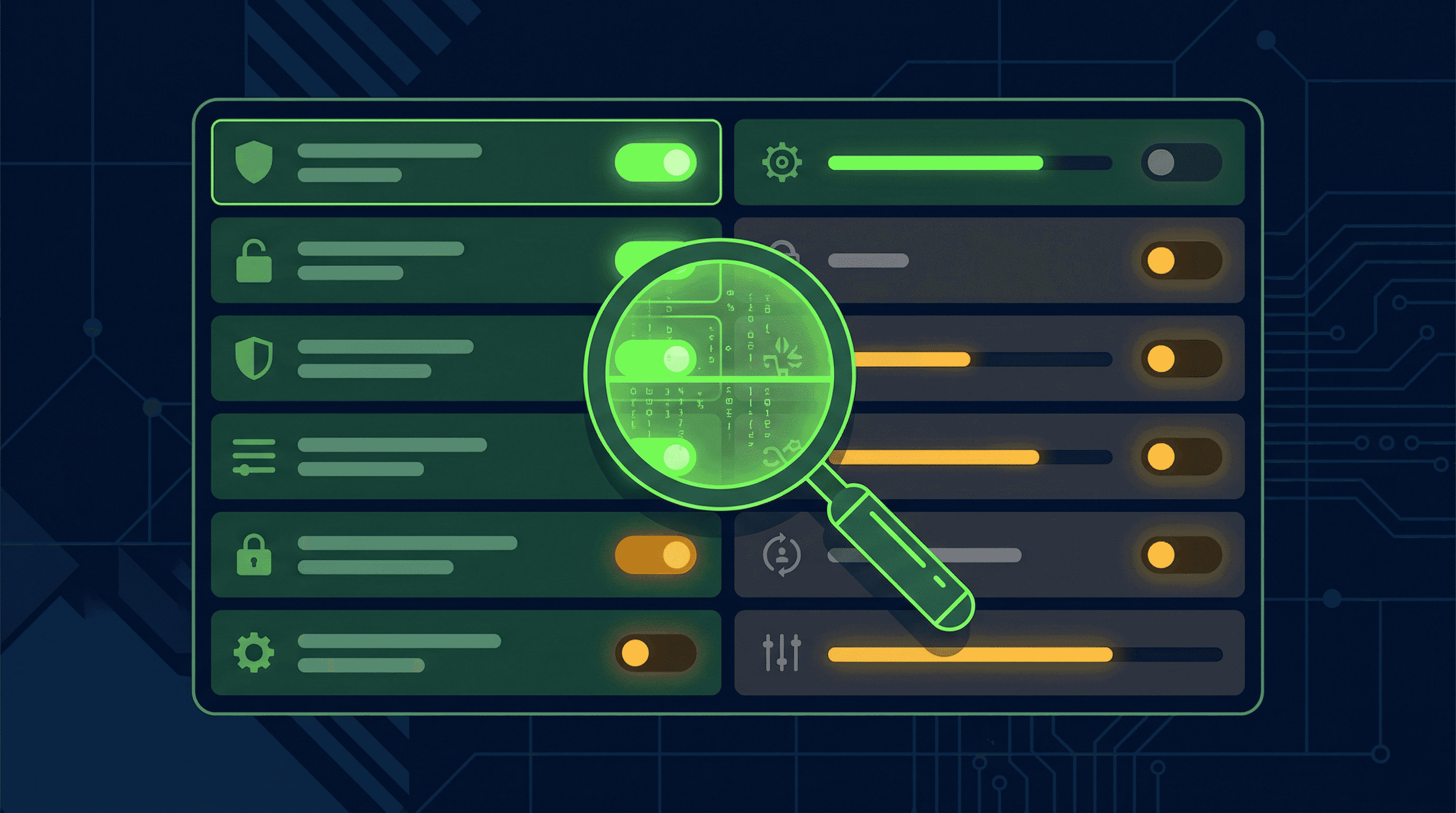
Security misconfigurations remain one of the most common causes of breaches. Even well-patched systems can be exposed by weak settings, disabled controls, or excessive permissions. Our Configuration Audits evaluate servers, operating systems, databases, cloud services, and security policies against industry benchmarks such as CIS, NIST, and ISO 27001. We identify deviations, prioritize risk, and provide clear remediation steps to harden your environment.
Engagement Snapshot
A quick view of scope, timeline, and deliverables. Coverage and depth are tailored to your architecture and risk profile.
Timeline
5-7 Business Days
Focus Areas
4 coverage points
Deliverables
4 report assets
Timeline
5-7 Business Days
Key Focus Areas
Deliverables
Standards & Frameworks
Our Methodology
We follow a systematic, multi-phased approach to ensure every vulnerability is identified, verified, and reported with actionable remediation steps.
Configuration Baseline Review
Comparing systems to CIS and industry benchmarks
Access Control Validation
Verifying least-privilege permissions and roles
Logging & Monitoring Checks
Ensuring security events are captured and visible
Policy & Control Review
Validating encryption, firewall, and endpoint controls
Risk Prioritization
Ranking issues by impact and remediation urgency
Frequently Asked Questions
Q.What is a configuration security audit?
It evaluates system settings across servers, applications, and infrastructure to identify misconfigurations that create security risks.
Q.Why are configuration audits important?
Misconfigured systems are a leading cause of breaches. Regular audits keep environments hardened against evolving threats.
Q.Do configuration audits include cloud environments?
Yes. We cover on-premise infrastructure and cloud platforms alike.
Q.How often should configuration audits be performed?
At least annually, and after major infrastructure or cloud changes.
Q.What standards do you follow for configuration audits?
We align with CIS Benchmarks, NIST guidance, ISO 27001 controls, and vendor hardening standards.
Common Vulnerabilities Covered
We test for the full spectrum of modern security threats, ensuring your assets are resilient against real-world exploits.
Default Credentials
Systems running with factory default logins
Excessive Permissions
Overly broad access rights granted to users
Disabled Security Controls
Firewalls, encryption, or monitoring disabled
Improper Logging
Missing or misconfigured security logs
Insecure Service Configuration
Services exposed with unsafe settings
Ready to bulletproof your application?
Our experts are ready to perform a comprehensive security assessment tailored to your needs. Get started today and secure your digital assets.
Get Started Nowarrow_forward